AI & Engineering · · 9 min read
How Does Real-Time AI Speech-to-Speech Translation Work?
How Gemini 3.5 Live Translate processes and translates live conversations directly from audio to audio, eliminating clunky text bottlenecks.
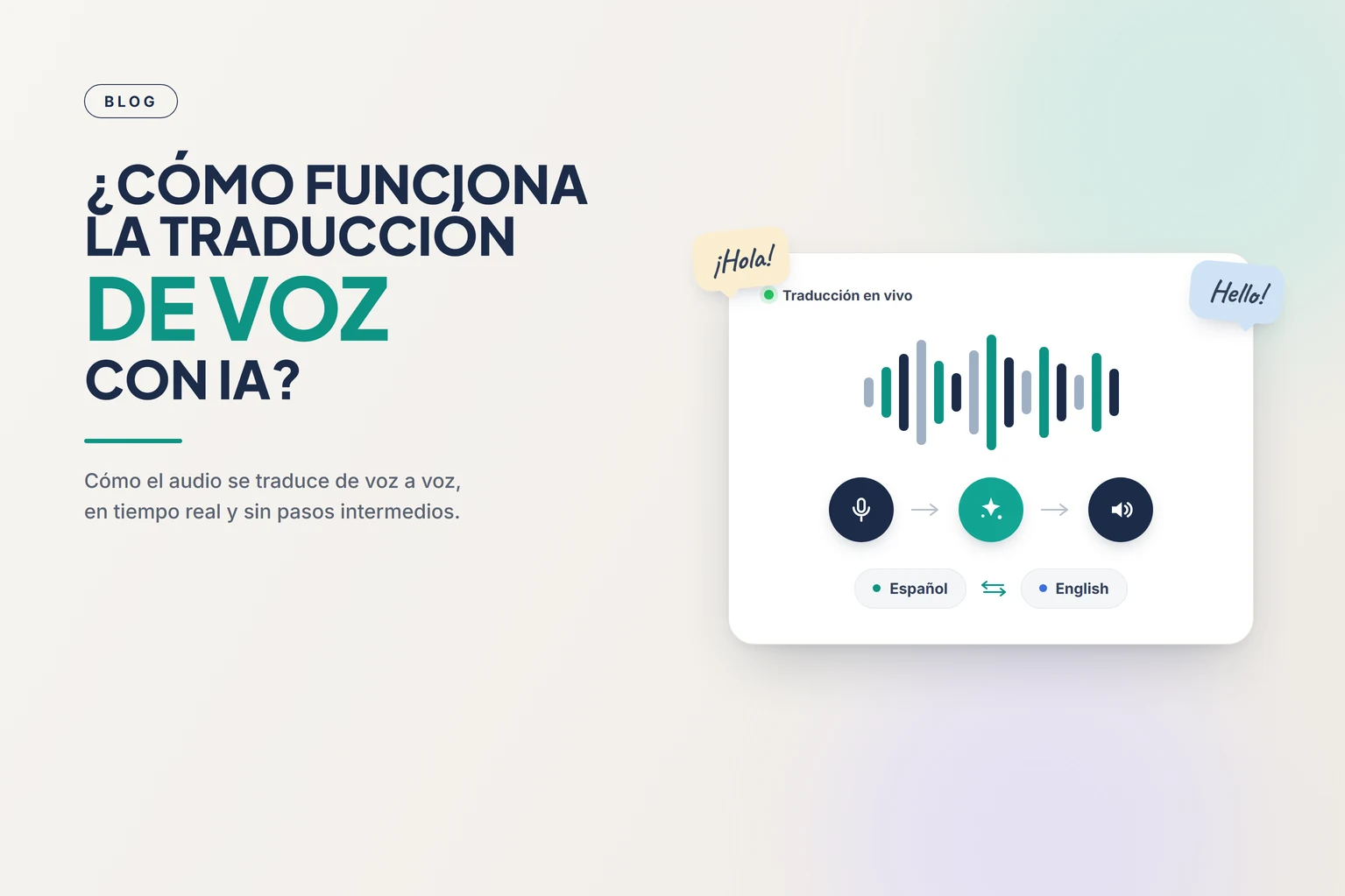
Real-time voice translation feels like science fiction when it works seamlessly: one participant speaks their native tongue, and the counterpart hears fluent, natural audio almost instantaneously. At VerbaMeet, we leverage Gemini 3.5 Live Translate—an advanced multimodal real-time speech-to-speech model accessed via the Gemini Live API.
Beyond the Traditional Voice → Text → Voice Pipeline
Traditional approaches chained three separate engines together: Automatic Speech Recognition (ASR), followed by Machine Translation (MT), followed by Text-to-Speech (TTS). This cascading pipeline accumulated latency at every hop and stripped vocal emotion. Modern models accept continuous streaming audio and directly synthesize translated speech in a unified neural pass.
1. Bidirectional Streaming Audio & Ultra-Low Latency
Gemini Live maintains a stateful full-duplex WebSocket session with raw audio streams. It processes voice chunks in small 20–40 millisecond buffers using browser AudioWorklet processors, generating translated speech tokens dynamically before the speaker even finishes an entire paragraph.
2. Automatic Language & Conversational Context Detection
The model continuously detects spoken input dialects and leverages surrounding conversational context to resolve homophones, regional idioms, and grammatical gender. Each participant independently selects their receiving language code via standard BCP-47 headers.
3. Native Audio Synthesis with Human Cadence
Because audio generation is an intrinsic capability of the multimodal network, the translated output retains natural pitch, breathing pauses, and conversational cadence far more convincingly than conventional synthetic screen readers.
The Engineering Frontier: Managing Latency
A flawless translation arriving thirty seconds after a sentence is spoken kills conversational momentum. State-of-the-art engineering focuses on jitter buffering, turn detection, and balancing token lookahead against millisecond-level responsiveness.
What This Means for Remote Collaboration
The ultimate goal of voice technology is invisibility. Participants shouldn't have to alter how they speak or wait for awkward transcription captions. You speak naturally in your mother tongue, they hear you in theirs, and technology fades quietly into the background.